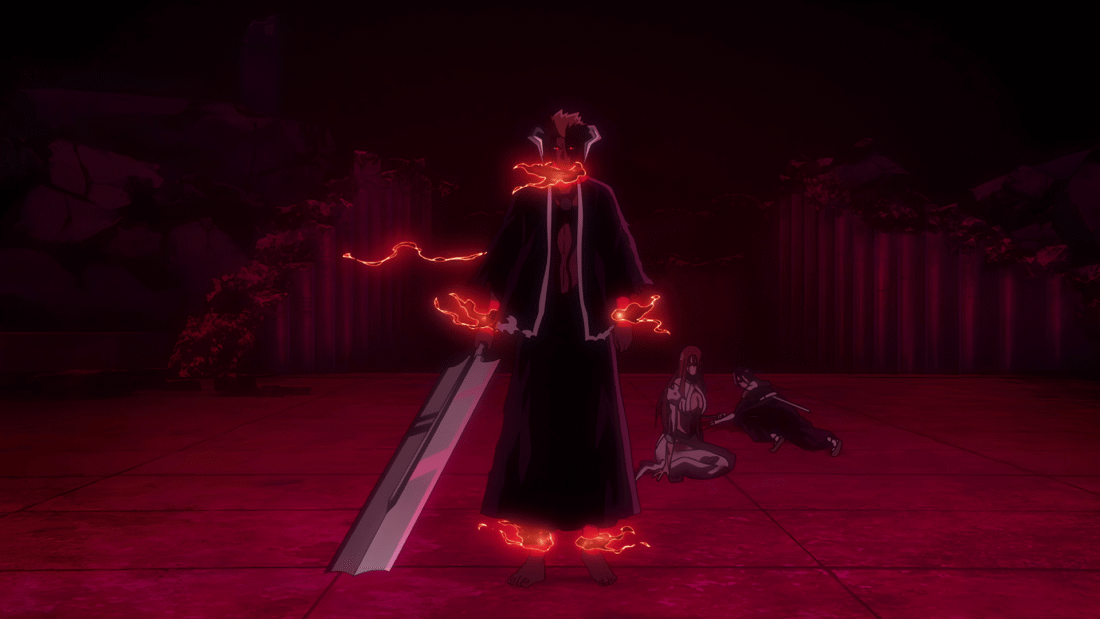
Somewhere between Ichigo’s true Bankai and an ending with no ending, “Defend You” pulled off something no other episode of anything had managed on IMDb before. Within days of airing on August 22, the fifth episode of Bleach: Thousand-Year Blood War — The Calamity had climbed to a perfect 10/10 from more than 20,000 user ratings, a number outlets covering the milestone described as the highest score IMDb had ever recorded for a single television episode — ahead of One Piece’s Gear 5 debut, Naruto’s Valley of the End, and even the episode of Bleach that had held the season’s own record just one week earlier.
That’s a remarkable number for seven or eight seconds of chains and a crimson moon to justify. Here’s what actually happens in the episode, and why it landed the way it did.
What Happens in “Defend You”
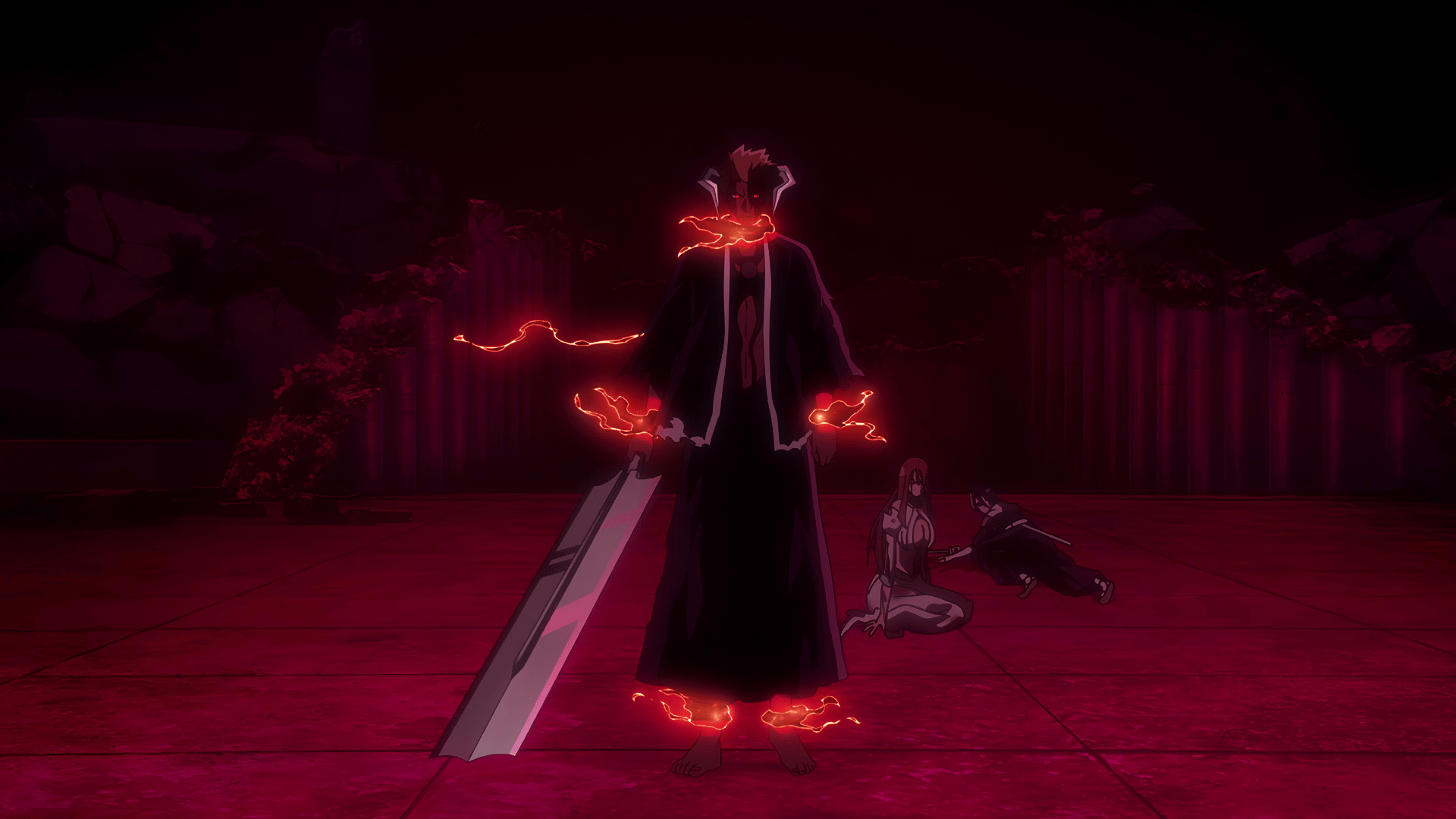
Ichigo spends most of the episode throwing everything he has at Yhwach, who deflects each attack without visible strain before running him through with a blade. Orihime doesn’t stop healing him through any of it, absorbing hits of her own while keeping Ichigo alive on a loop that pushes her power further than the show has ever tested it. Uryu and Jugram’s fight escalates in parallel, though the episode’s center of gravity never really leaves Ichigo and Orihime.

It’s a bleak fight on paper — Yhwach barely engages, and the heroes spend the whole episode on the back foot. What makes it land isn’t the outcome. It’s the transformation that arrives in the middle of it.
The Bankai Fans Waited a Decade For
Ichigo’s true Bankai — blood-red chains wrapped around a crimson moon — is a reveal the manga spent years building toward without ever fully rendering it the way this episode does. Part of why the reaction was so immediate is that fans had a specific, long-held idea of what this moment needed to sound and look like, and the episode matched it. One reaction to the transformation’s sound design put it directly: “EASILY THE BEST SOUNDING BANKAI I’VE HEARD I GOT CHILLS.” Multiple fans singled out the same detail — the chain rattle layered under Ichigo’s roar — as the moment that sold the whole sequence.
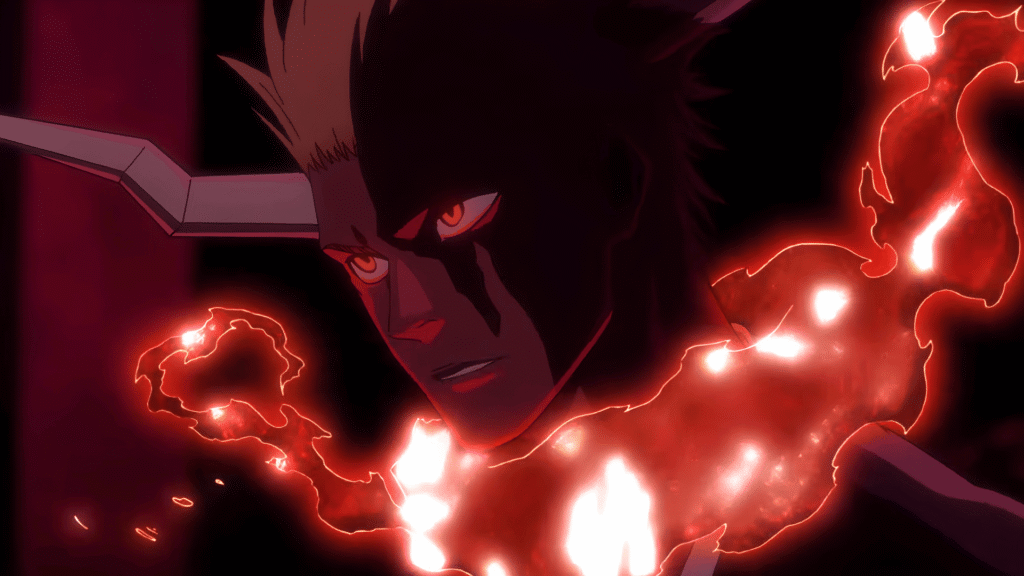
Some viewers who’d been skeptical of the design in earlier promotional material said the full sequence changed their mind entirely, describing it as a form that “just makes sense” once seen in motion rather than as a still image. That reversal matters more than blanket praise would — it suggests the episode won people over with execution, not just fan service.
Orihime’s Fight Nobody Saw Coming
The other half of the episode belongs to Orihime, and it’s arguably doing more narrative work than the Bankai reveal itself. Her healing ability has spent three seasons in a support role, mostly framed as a way to keep other characters alive between their own big moments. “Defend You” reframes it as a fight in its own right — she isn’t standing behind Ichigo, she’s absorbing damage to buy him time, and the episode treats that as its own form of combat rather than a safety net. Combined with Ichigo’s transformation, fans described the pairing as “heartbreaking” — less a rescue than two characters running out of options together.

The Choice to Cut the Ending
The episode’s other talked-about decision has nothing to do with the fight. “Defend You” ends without the season’s usual outro — no credits song, just a few seconds of silence over two flowers on screen before the episode cuts out. It’s a small production choice, but it reads as a deliberate one: after an episode built around a decade-long payoff and a character pushed past her limit, giving the audience a normal, upbeat ending sequence would have undercut the weight of what just happened. Silence did more than a song could have.

How the Numbers Actually Stack Up
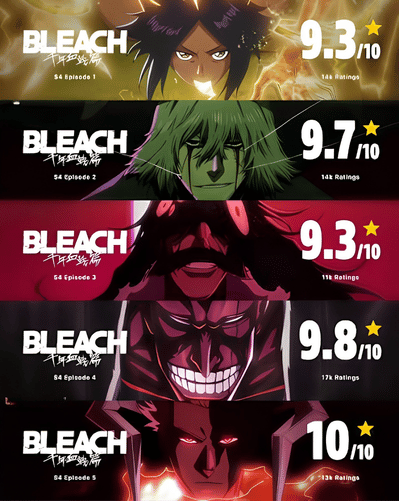
The season had already been on a streak before this. Episode 4, “The Perfect Crimson,” had reached a 9.9 on IMDb the week before and briefly held the record for the highest-rated episode of the final cour. “Defend You” didn’t just edge past it — it reached a perfect score, something none of the previous record-holders outlets compared it to had managed. Whether IMDb’s rating system will hold that exact number as more episodes and shows accumulate ratings over time is impossible to guarantee. What’s verifiable right now is that, at the time it aired, entertainment coverage treated this as the biggest single-episode rating story anime had produced in years.
What It Means Going Into the Finale
The high didn’t last. Episode 6 answered “Defend You” almost immediately, destroying the same Bankai one episode after it was revealed and stripping away most of what this episode built. That whiplash is very likely intentional — “Defend You” works as a peak specifically because the season needed somewhere to fall from. It’s the episode the rest of the final stretch measures itself against, and with the September 26 finale still to come, it’s a fair bet that whatever the show does to close out the war will be judged against the bar this one episode set. Here’s how the season got there and where it went after, episode by episode.